

PACTE™ Professional Photography Master of Photography 2 Series Bundle
Accumsan lacus vel facilisis volutpat est velit egestas. Sem fringilla ut morbi tincidunt.
Pharetra sit amet aliquam id diam. Duis at tellus at urna condimentum mattis. Ac turpis egestas integer eget aliquet nibh praesent tristique magna.
PACTE™ Transforming Micro-Tensions into Collective Intelligence in the Age of AIPACTE™
Kalina Terzieva
Copyright © Kalina Terzieva
All rights reserved.
Hybrid self-publishing edition.
CONTENTS
Foreword
Preface
Introduction – Why PACTE™
Chapter 1 – The Moment Before It Explodes
Chapter 2 – When Performance Drops Without Explanation
Chapter 3 – Psychological Safety: The Word Everyone Uses
Chapter 4 – Why Teams Don't Talk About What Matters
Chapter 5 – A Simple Framework for Complex Human Systems
Chapter 6 – P – Perceive
Chapter 7 – A – Acknowledge
Chapter 8 – C – Comprehend
Chapter 9 – T – Transform
Chapter 10 – E – Engage
Chapter 11 – Teams in the Age of AI
Chapter 12 – Case Stories in Action
PACTE™ Self-Assessment
Acknowledgments
Closing Letter
References
Foreword
Most books on teamwork and leadership begin with big ideas. This one begins with small tensions.
The kind you feel in a meeting when something is off but no one names it. The hesitation before speaking up. The sigh after a decision that 'works' but doesn't sit right. The quiet erosion of trust that happens not through conflict, but through avoidance.
In my years of working with teams — across large institutions, fast-moving startups, and complex transformation programs — I have learned one essential truth:
Teams rarely fail because of a lack of intelligence, talent, or good intentions. They struggle because the micro-tensions of everyday work remain unseen, unspoken, or misunderstood.
This book exists because those moments matter.
The PACTE™ Approach was not born in a classroom or a theory lab. It emerged in real rooms, with real teams, under real pressure — where performance expectations were high, emotions were present, and time was scarce. Over time, patterns became clear: the teams that thrived were not those that avoided tension, but those that knew how to work with it.
PACTE™ offers a simple yet powerful way to do exactly that. Not by adding more frameworks, but by strengthening something far more essential: the team's capacity to notice, name, understand, and transform what is happening between them — moment by moment.
Each step of the approach reflects a discipline that high-performing teams consistently practice:
• Perceive what is emerging beneath the surface
• Acknowledge it without blame or judgment
• Comprehend the deeper dynamics at play
• Transform tension into clarity and choice
• Engage through concrete, shared action
What makes this approach distinctive is its scale. PACTE™ does not require perfect conditions, long interventions, or expert facilitation at every step. It works in everyday conversations, short meetings, and imperfect moments. It is designed to be practiced — not admired.
This book is intentionally practical. You will find real situations, concrete examples, and simple exercises you can use immediately — with teams you coach, teams you lead, or teams you are part of. The goal is not to eliminate tension, but to turn it into a source of learning, alignment, and trust.
Because when teams learn to work with what is present — rather than what is comfortable — they become more resilient, more human, and more effective.
Welcome to PACTE™. Let's begin where teams truly change: in the small moments that shape everything.
Preface
Why I Care About Small Tensions
For a long time, I couldn't quite name what I was sensing in teams. On paper, things looked good.
The strategy was clear. The people were competent, committed, often genuinely kind. And yet — something felt heavy.
I would sit in meetings where everyone agreed, but no one looked relieved. I coached leaders who carried a quiet fatigue they couldn't explain. I worked with teams who wanted to collaborate better, but kept circling the same invisible obstacles.
What struck me most was not the presence of conflict, but the absence of honest contact. So much was happening between people — glances, pauses, hesitations, shifts in tone — and almost none of it was being addressed. Not because people didn't care, but because they didn't quite know how to approach it without making things worse.
I know this terrain well, not only as a coach, but as a human being. Like many of us, I learned early how to adapt, to perform, to stay 'professional.' I learned how to be effective in complex environments — but not always how to slow down and listen to what was happening beneath the surface.
The PACTE™ Approach grew out of my desire to change that — gently, realistically, and without asking people to become someone they're not. It didn't start as a framework. It started as a question I kept asking myself in sessions:
What is happening here, right now, that wants our attention?
From there, simple practices began to take shape. Ways to notice tension without dramatizing it. Ways to name what feels delicate without blaming. Ways to understand what drives our reactions — and then choose how we want to respond together.
PACTE™ is my answer to the belief that transformation has to be heavy or disruptive to be meaningful. I have seen again and again that small, well-held moments can shift an entire team's trajectory.
This book is for those moments. It is for leaders who sense that performance and humanity are not opposites. For coaches and facilitators who want language that meets people where they are. For team members who feel things deeply but haven't always known how to express them at work.
You won't find grand promises here. You will find invitations — to pause, to notice, to engage differently. Some exercises may feel surprisingly simple. That's intentional. Depth does not require complexity; it requires presence.
Thank you for being willing to pay attention to the subtle moments. They are where trust is built. They are where teams become more than a collection of roles. They are where meaningful work truly begins.
Kalina Terzieva
Copyright © Kalina Terzieva
All rights reserved.
Hybrid self-publishing edition.
CONTENTS
Foreword
Preface
Introduction – Why PACTE™
Chapter 1 – The Moment Before It Explodes
Chapter 2 – When Performance Drops Without Explanation
Chapter 3 – Psychological Safety: The Word Everyone Uses
Chapter 4 – Why Teams Don't Talk About What Matters
Chapter 5 – A Simple Framework for Complex Human Systems
Chapter 6 – P – Perceive
Chapter 7 – A – Acknowledge
Chapter 8 – C – Comprehend
Chapter 9 – T – Transform
Chapter 10 – E – Engage
Chapter 11 – Teams in the Age of AI
Chapter 12 – Case Stories in Action
PACTE™ Self-Assessment
Acknowledgments
Closing Letter
References
Foreword
Most books on teamwork and leadership begin with big ideas. This one begins with small tensions.
The kind you feel in a meeting when something is off but no one names it. The hesitation before speaking up. The sigh after a decision that 'works' but doesn't sit right. The quiet erosion of trust that happens not through conflict, but through avoidance.
In my years of working with teams — across large institutions, fast-moving startups, and complex transformation programs — I have learned one essential truth:
Teams rarely fail because of a lack of intelligence, talent, or good intentions. They struggle because the micro-tensions of everyday work remain unseen, unspoken, or misunderstood.
This book exists because those moments matter.
The PACTE™ Approach was not born in a classroom or a theory lab. It emerged in real rooms, with real teams, under real pressure — where performance expectations were high, emotions were present, and time was scarce. Over time, patterns became clear: the teams that thrived were not those that avoided tension, but those that knew how to work with it.
PACTE™ offers a simple yet powerful way to do exactly that. Not by adding more frameworks, but by strengthening something far more essential: the team's capacity to notice, name, understand, and transform what is happening between them — moment by moment.
Each step of the approach reflects a discipline that high-performing teams consistently practice:
• Perceive what is emerging beneath the surface
• Acknowledge it without blame or judgment
• Comprehend the deeper dynamics at play
• Transform tension into clarity and choice
• Engage through concrete, shared action
What makes this approach distinctive is its scale. PACTE™ does not require perfect conditions, long interventions, or expert facilitation at every step. It works in everyday conversations, short meetings, and imperfect moments. It is designed to be practiced — not admired.
This book is intentionally practical. You will find real situations, concrete examples, and simple exercises you can use immediately — with teams you coach, teams you lead, or teams you are part of. The goal is not to eliminate tension, but to turn it into a source of learning, alignment, and trust.
Because when teams learn to work with what is present — rather than what is comfortable — they become more resilient, more human, and more effective.
Welcome to PACTE™. Let's begin where teams truly change: in the small moments that shape everything.
Preface
Why I Care About Small Tensions
For a long time, I couldn't quite name what I was sensing in teams. On paper, things looked good.
The strategy was clear. The people were competent, committed, often genuinely kind. And yet — something felt heavy.
I would sit in meetings where everyone agreed, but no one looked relieved. I coached leaders who carried a quiet fatigue they couldn't explain. I worked with teams who wanted to collaborate better, but kept circling the same invisible obstacles.
What struck me most was not the presence of conflict, but the absence of honest contact. So much was happening between people — glances, pauses, hesitations, shifts in tone — and almost none of it was being addressed. Not because people didn't care, but because they didn't quite know how to approach it without making things worse.
I know this terrain well, not only as a coach, but as a human being. Like many of us, I learned early how to adapt, to perform, to stay 'professional.' I learned how to be effective in complex environments — but not always how to slow down and listen to what was happening beneath the surface.
The PACTE™ Approach grew out of my desire to change that — gently, realistically, and without asking people to become someone they're not. It didn't start as a framework. It started as a question I kept asking myself in sessions:
What is happening here, right now, that wants our attention?
From there, simple practices began to take shape. Ways to notice tension without dramatizing it. Ways to name what feels delicate without blaming. Ways to understand what drives our reactions — and then choose how we want to respond together.
PACTE™ is my answer to the belief that transformation has to be heavy or disruptive to be meaningful. I have seen again and again that small, well-held moments can shift an entire team's trajectory.
This book is for those moments. It is for leaders who sense that performance and humanity are not opposites. For coaches and facilitators who want language that meets people where they are. For team members who feel things deeply but haven't always known how to express them at work.
You won't find grand promises here. You will find invitations — to pause, to notice, to engage differently. Some exercises may feel surprisingly simple. That's intentional. Depth does not require complexity; it requires presence.
Thank you for being willing to pay attention to the subtle moments. They are where trust is built. They are where teams become more than a collection of roles. They are where meaningful work truly begins.
Note on Use: Designed for professional development. Not intended for diagnosis, treatment, or clinical use.
Related products
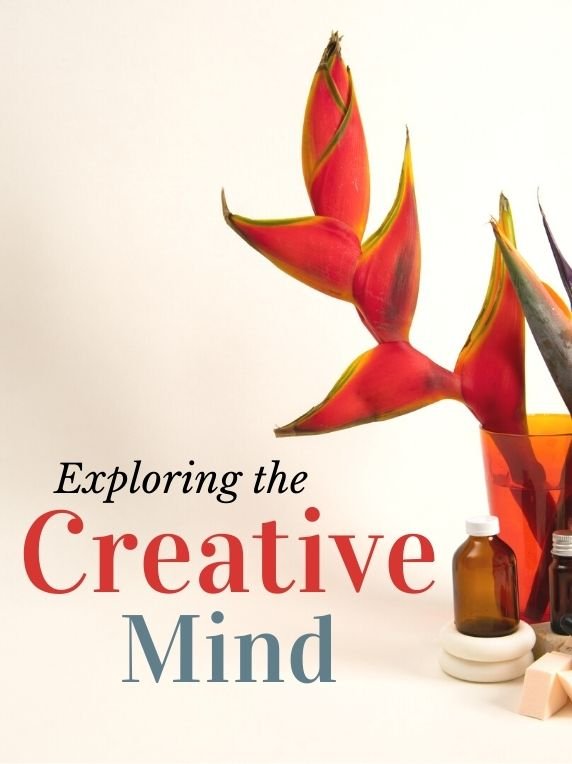
Exploring the Creative Mind: Thinking Outside the Box
Published on 1999
$24.00
Interdum velit laoreet id donec ultrices tincidunt. Purus faucibus ornare suspendisse sed. Vitae congue mauris rhoncus aenean vel. A cras semper auctor neque vitae tempus quam pellentesque nec.
Exploring the Creative Mind: Thinking Outside the Box
$24.00
Interdum velit laoreet id donec ultrices tincidunt. Purus faucibus ornare suspendisse sed. Vitae congue mauris rhoncus aenean vel. A cras semper auctor neque vitae tempus quam pellentesque nec.